





Introduction: The Digital Playground at Risk
Parents are worrying daily on the safety of their children online. The Kids Online Safety Act will fulfill such concerns by putting clear responsibilities on tech platforms. This blog addresses the proposal of KOSA 2025, its potential impacts on social media, and the implications of this proposal on families. It describes its legal clauses, responses in the industry and the possible issues of censorship and expense.
What this blog will cover:
KOSA 2025 legislation overview.
Key features of the law
The reactions of social media industry.
Parental control effects and privacy of children.
Concerns and criticisms
A majority of teenagers (48 percent) declare that social media is damaging to people of their age, compared to 32 percent in 2022.
Summary of the KOSA Legislation 2025.
Kids Online Safety Act (KOSA) is a bipartisan bill that was introduced in 2022 and currently revised in 2025. It is based on the experiences of the previous efforts and combats the online threats against children younger than 16. In the KOSA bill 2024 updates, social media platforms were tightened in terms of definition and obligations.
Details to include:
Sponsored by Senators Marsha Blackburn and Richard Blumenthal.
Intends to defend minors by imposing restrictions on platforms.
Manipulation of targets algorithm and explicit content and addict design.
Cover websites and applications that the users are under 16.
Enforced in all states of the U.S. with local variations being overridden.
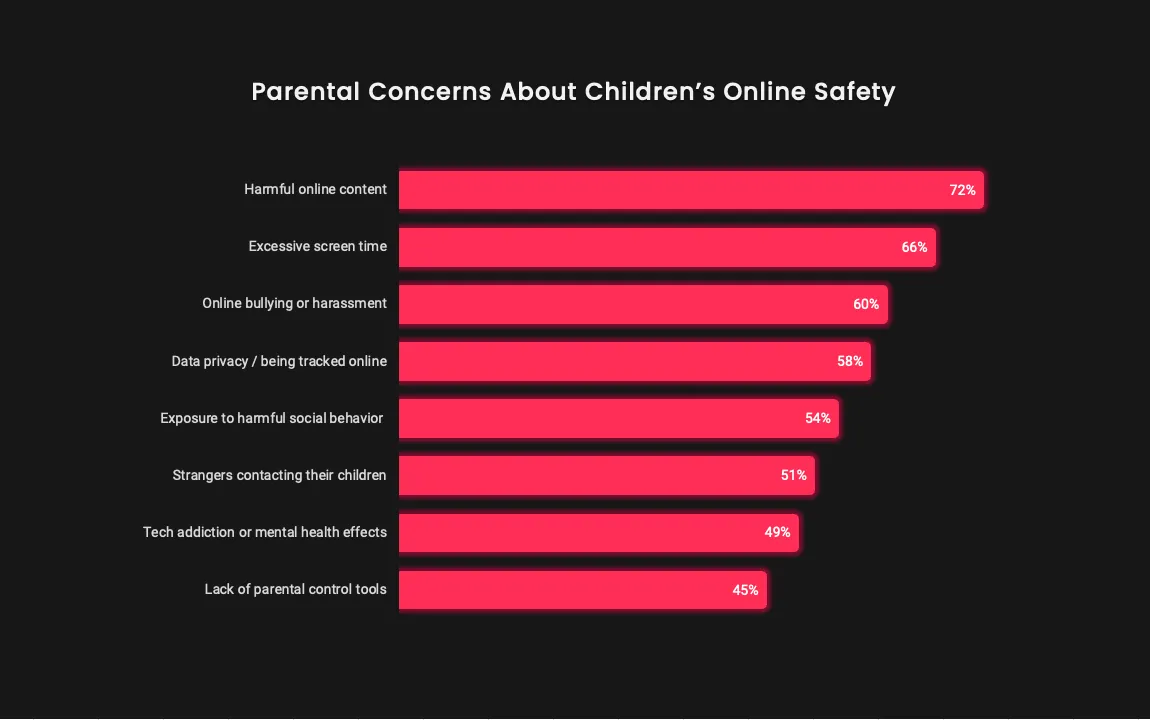
Key Provisions of the Children’s Online Protection Law
Enhancing Duty of Care Measures
The new legislation presents a duty of care that an online platform should fulfill. The social media companies are supposed to:
Soon delete the material that can damage minors.
Provide parents with high-level tools of control.
Use strict privacy settings as default.
Do not have features that encourage too much screen time.
| Feature | Before KOSA | After KOSA |
| Content‐removal standards | No uniform timeline; platforms decide case by case | Must remove or age-gate harmful content within 24 hours of detection |
| Parental controls | Basic on/off toggles | Advanced dashboards with activity reports and one-click lockdown |
| Default privacy settings | Same defaults for all users | Under-16 accounts default to “private” and limit data sharing |
| Algorithm transparency | Proprietary; no external review | Platforms must publish summaries of youth-targeting logic |
| Age verification | Self-reported birthdate | “Reasonable” age checks (e.g., document upload, trusted third-party) |
| Research access | Rare and tightly controlled | Independent researchers get secure, anonymized data access for studies |
Transparency of Algorithms and Privatization of Data.
KOSA also extends beyond the past laws in that it requires the transparency of tech companies. Minor recommender algorithms should be disclosed. Researchers are also free to check platform data to determine harmful content loops.
Algorithms and their impact on young people: A study by NYU:
External audits should be permitted on platforms.
Individual targeting like on mental health or eating disorders will be prohibited.
Both kids and guardians should be provided with clear reporting tools.
The Laws of Social Media Child Protection.
KOSA is a child protection law that is associated with other age-check laws of social media, including California. But on the other hand, it establishes a national standard, as opposed to the fragmented state laws. It supplements the current initiatives such as COPPA and the Age-Appropriate design Code implemented in California.
Use this comparison:
COPPA is concerned with kids that are under-13, whereas KOSA stretches to under-16.
The Californian law is local, the KOSA is federal.
KOSA proposes the proactive design responsibilities, not only the rules of data collection.
This makes it one of the major additions to the current laws of child protection in social media.
Tech Company Stance on KOSA
Support from Innovators
Some companies welcome KOSA. Examples include Apple who hailed it as a compromise between child protection and user privacy.
The company has stated that it will roll out new privacy features on a yearly basis, be it in the form of Intelligent Tracking Prevention, Screen Time or App Tracking Transparency, so that our users particularly children have the best privacy protections possible.
Tim Cook, Apple CEO
Major Platforms Concerns.
Other companies, such as Meta and Google, are less aggressive. They raise issues of ambiguity in legislation and possible censorship threats on the Internet. These corporations claim that KOSA can compel platforms to over-censor content, and legitimize voices.
Mention:
The fear of Meta that excessively broad responsibilities will be detrimental to the LGBTQ and minority communities.
The call of Google to be more specific in regulations of content moderation.
The financial strain that lesser platforms can experience.
Potential Trade-Offs and Challenges.
Despite the good intentions, KOSA is controversial.
Key issues:
The over moderation can result in blocked educational or mental content.
Small developers may get strained by the implementation cost.
Surveillance by parents is a privacy issue among adolescents.
Consider a post made by a teenager regarding mental health. It is automatically flagged. This may curtail pure expression and useful conversation.
Questions are often asked, and their responses are provided in the frequently asked questions (FAQ) section.
Will KOSA invade the privacy of the accounts of my teen?
Yes. Minors have to be defaulted to high privacy settings on platforms.
Is KOSA age verified?
Absolutely. Companies should employ fair means to check whether a user is a minor below the age of 16.
Where can I track updates?
In Congress.gov KOSA Bill, official progress can be found.
Conclusion: Surviving the Social Media of the Future.
Kids Online Safety Act is the beginning of a new era of regulation of the child online environment. It might develop safer and respectable online spaces. Nonetheless, this can only be implemented successfully through clarity, fairness and involvement of all stakeholders.
Here is the question: How would you want platforms to engage parents in kid protection on the Internet??

More from Kids

Minnesota Sues TikTok, Accusing the App of Exploiting Kids with Addictive Algorithms

Minnesota has filed a high-profile Minnesota TikTok lawsuit against the social media giant. Officials allege that TikTok’s design exploits children …

Time Travel Theatre Karachi Opens at Dino Safari Park
Karachi just got a fun new spot for families. The Time Travel Theatre Karachi has opened at Dino Safari Park …